
Criminal Records in Pinal County
Three groups of agencies generate Pinal County criminal records. The Pinal County Sheriff, led by Sheriff Ross Teeple, books people into the Adult Detention Center at 971 N Jason Lopez Circle in Florence. City police in Casa Grande, Apache Junction, Maricopa, Eloy, and other towns also make arrests and feed cases into the same court system. The County Attorney, Brad Miller, then reviews police reports and decides which charges to file in Superior Court or justice court.
An arrest record is not the same as a criminal court record, and a criminal court record is not the same as a conviction. An arrest record starts at booking and shows who was taken into custody, on what charges, and at what time. A criminal court record starts when the County Attorney files a complaint, information, or indictment. A conviction record only exists after a guilty plea or a guilty verdict. Many arrests never become convictions, and the public record has to be read with that gap in mind.
Pinal Superior Court criminal files include felony complaints, informations, indictments, minute entries, arraignment records, release and bond orders, plea agreements, trial records, sentencing documents, restitution orders, probation terms, and set-aside or sealing applications. Justice and municipal courts handle misdemeanors, criminal traffic, initial appearances, preliminary matters, and many local warrants.
How to Search Pinal County Criminal Records
Most users start with the free Arizona Judicial Branch Public Access portal, which covers Pinal Superior Court, the justice courts, and the municipal courts in one dropdown. The portal shows case numbers, parties, charges, hearings, and dispositions but excludes victim and witness data, sealed cases, and most juvenile delinquency information. For full pleadings and orders, the next stop is the Clerk of Superior Court or Arizona eAccess for paid document images.
- Open Arizona Public Access and pick Pinal County Superior Court or the relevant justice or municipal court from the location dropdown.
- Search by last name, first name, or case number. A sample valid case number format is CV-200812345; criminal cases use a similar prefix and year scheme.
- Open the case to view parties, charges, filing date, hearings, docket entries, and disposition.
- For sealed documents, certified copies, or items not on Public Access, file a records request with the Clerk of Superior Court or visit the Clerk in Florence in person.
- For a full statewide criminal history, request a personal review through Arizona DPS using the Applicant Fingerprint Card and a fee.
State-level criminal history searches go through the Arizona Department of Public Safety. DPS keeps the central state repository and is the official source for a full rap sheet. A casual name search at DPS is not allowed, but a personal review by the record subject is, and law enforcement, licensing agencies, and approved employers can request a fingerprint-based check.
Arrest Records vs. Criminal Court Records
An arrest happens out in the field or at the jail; a court case starts only after the County Attorney files charges. The two records often share names and dates, but they live in different systems and answer different questions. Arrest data sits with the Sheriff and police. Court data sits with the Clerk of Superior Court and the limited-jurisdiction courts.
| Arrest Record | Criminal Court Record | |
|---|---|---|
| Source | Pinal Sheriff or city police | Clerk of Superior Court, justice or municipal court |
| Created When | At booking | When the County Attorney files charges |
| Contents | Booking info, alleged charges, mugshot, hold reason | Pleadings, motions, hearings, orders, disposition |
| Lookup Path | Pinal jail search, police press logs, public records request | Arizona Public Access, Arizona eAccess, Clerk request |
| How Long It Stays | Custody listing drops at release; booking record itself stays | Case file kept by the court under retention rules |
Note: An arrest by itself never proves guilt; the Pinal inmate search disclaimer says the listing is not a finding of guilt and only confirms someone is or has been in jail.
Charges vs. Convictions in Pinal County
Being charged means the prosecutor has filed a formal accusation. A conviction means the case has been resolved against the defendant, either by a plea or a verdict. The two look similar on a quick search but carry very different legal weight. Pinal County Attorney deputy attorneys review police reports and only file when the case meets the ethical standard of a reasonable likelihood of conviction at trial. They may also decline, send a case back for more investigation, or offer a plea.
| Charge | Conviction | |
|---|---|---|
| Stage of the Case | Accusation filed by the County Attorney | Final finding after a plea or verdict |
| Burden of Proof | Probable cause to file | Beyond a reasonable doubt to convict |
| Possible Outcomes | Dismissed, reduced, plea, trial | Sentence, probation, prison, fine, restitution |
| Public Record | Yes, unless sealed | Yes, unless sealed or set aside |
| Effect on Rights | None on its own | May affect voting, firearms, jobs |
Pinal court files spell out the stage in the docket. Look for entries like complaint filed, arraignment, plea, trial, verdict, and judgment of guilt. A dismissed case is not a conviction. An acquittal is not a conviction. A deferred or diverted case may or may not end in a conviction, so the disposition line is the field that matters most.
Prosecution and Defense in Pinal County
The Pinal County Attorney handles the prosecution side. Brad Miller leads the office, and the prosecutor team represents the State of Arizona under Arizona Revised Statutes Title 11, Chapter 3, Article 6. A look at the official County Attorney page on pinal.gov shows the office mission and the links into Victim Services, Criminal Statistics, and the Public Records Request portal.
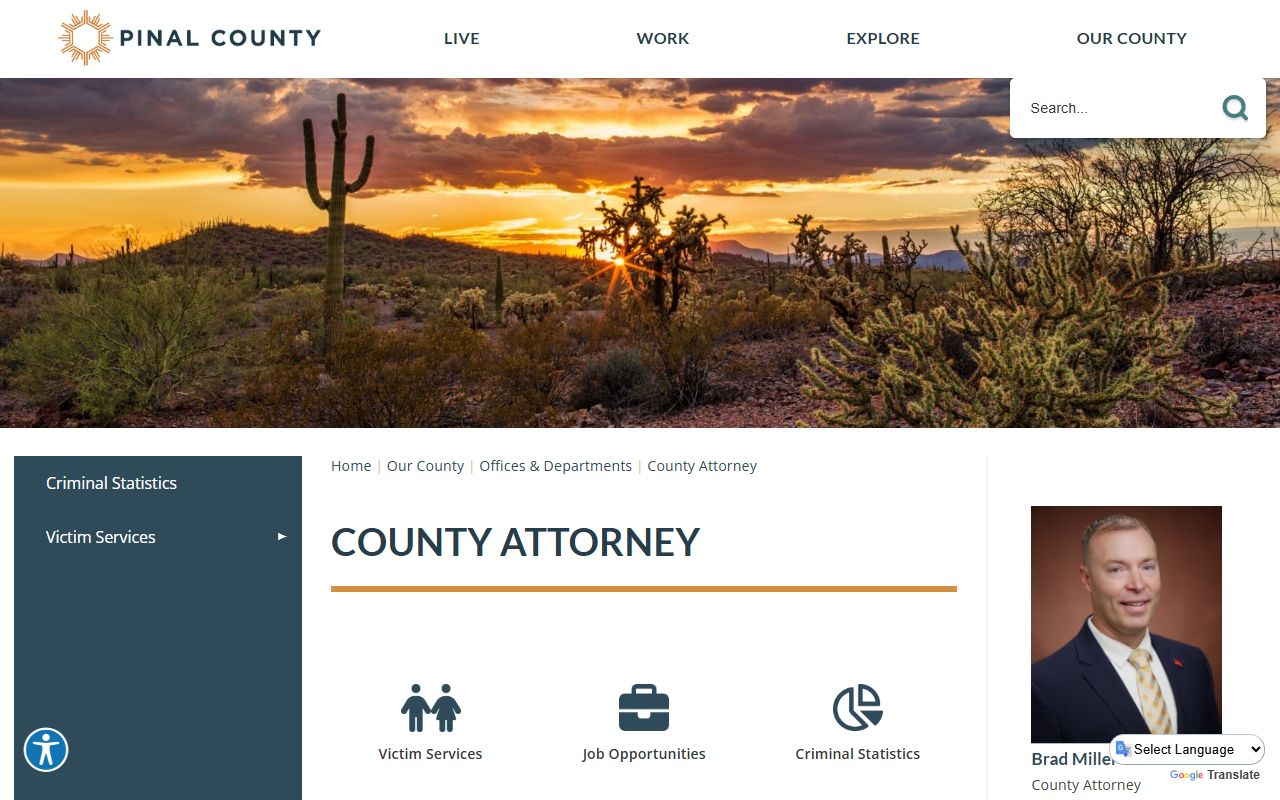
That same office runs victim services for Pinal criminal cases. Advocates inform victims of their rights, explain hearings, help file restitution and protective orders, and may be reached at 520-866-6813 or 1-800-208-6897 extension 6813. Victims do not direct prosecution, but they do have a right to confer before final charging decisions and plea agreements under Arizona victim rights law.
The defense side is led by the Pinal County Public Defender, Kate Milewski. The office defends indigent adults and juveniles facing criminal charges or mental health commitments when appointed by Pinal Superior Court or a Pinal justice court.
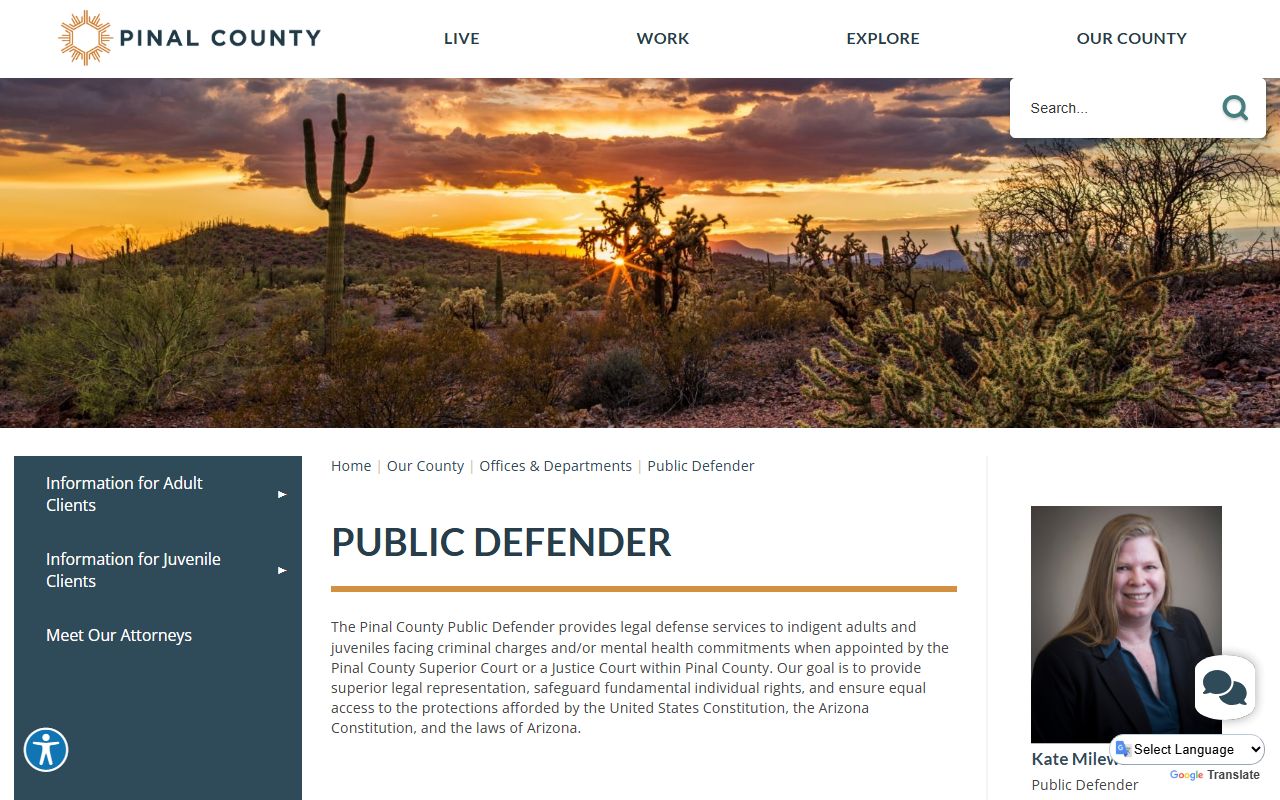
The Public Defender warns family and friends that jail calls and visits are recorded and can be used against the defendant. The page asks people not to contact victims, witnesses, or co-defendants, and not to write directly to the judge or the prosecutor.
Key Pinal County Criminal Offices
Pinal County Attorney
Brad Miller, County Attorney
Pinal County Government, Florence, AZ
Victim Services: 520-866-6813 or 1-800-208-6897 ext. 6813
Site: pinal.gov/1676/County-Attorney
Pinal County Public Defender
Kate Milewski, Public Defender
971 N Jason Lopez Circle, Building G
Florence, AZ 85132
Mailing: P.O. Box 2457, Florence, AZ 85132
Phone: 520-866-7199 | Fax: 520-866-7244
Sealed vs. Set Aside vs. Expunged Records
Arizona uses three different tools to deal with old criminal records: sealing, set aside, and a narrow marijuana expungement. They are not the same, and a Pinal user choosing the wrong tool can waste time and filing effort. Sealing hides the record. A set aside removes most penalties but leaves the record visible. Expungement, in the strict sense, only applies to certain marijuana offenses under separate Arizona law.
Sealing of arrest, conviction, and sentencing records is governed by A.R.S. § 13-911, in effect since December 31, 2022.
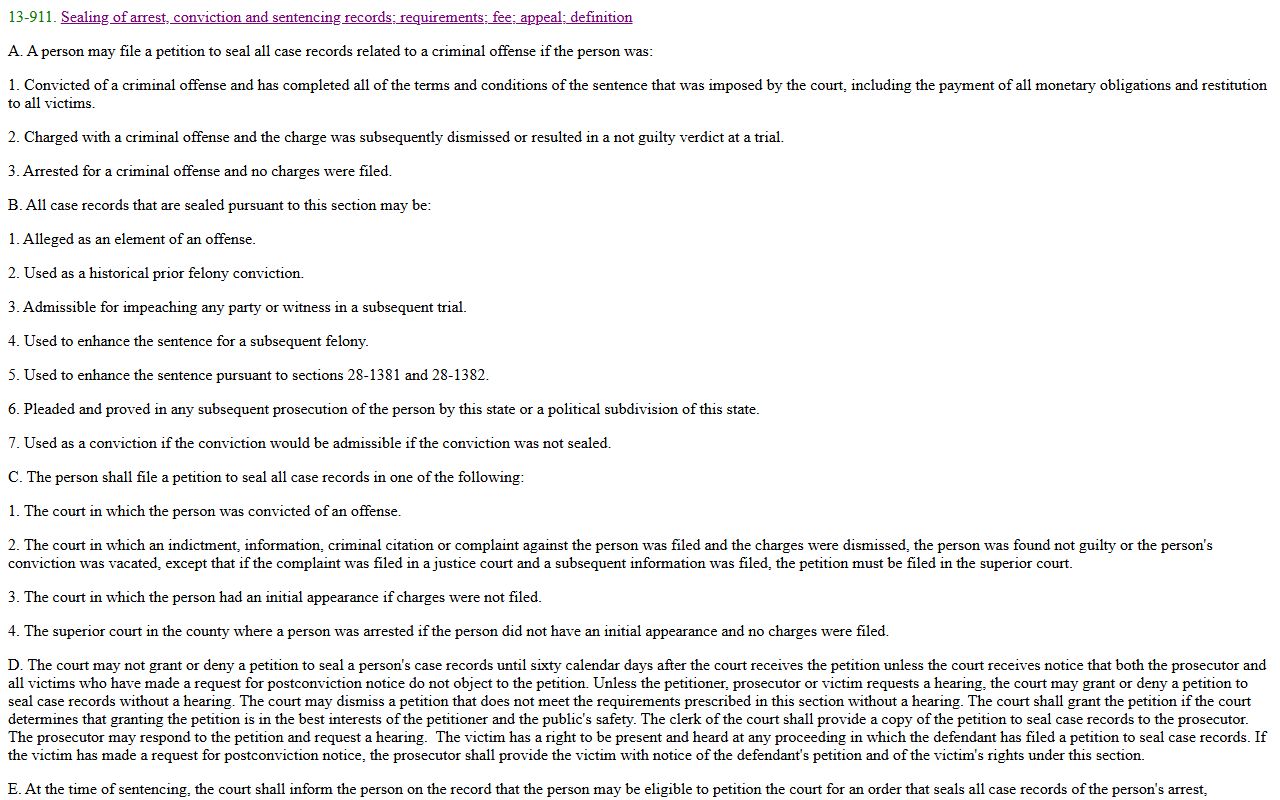
Under § 13-911, a person may petition to seal case records if the sentence and monetary obligations are complete, if charges were dismissed or ended in a not-guilty verdict, or if an arrest never led to charges. A sealed record can still be used for listed criminal-justice purposes, and the petition has to be filed in every court that holds a qualifying record.
A set aside under A.R.S. § 13-905 is the older Arizona option. The court dismisses the complaint, information, or indictment after sentence completion, but DPS still annotates the criminal history. The set aside application has no filing fee.
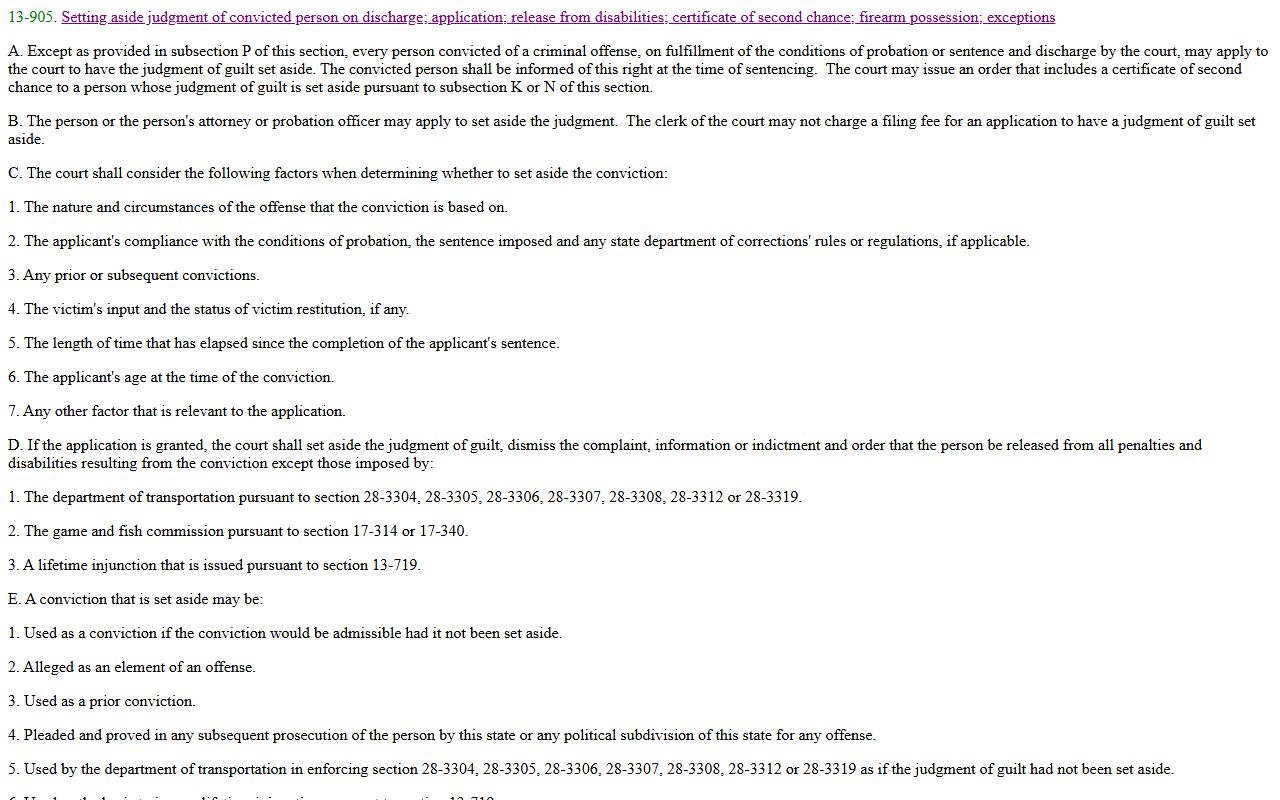
The set aside court looks at the offense circumstances, sentence compliance, prior or later convictions, victim input, restitution, time elapsed, and the age of the person at conviction. It is a real benefit, but it is not erasure.
| Sealed (§ 13-911) | Set Aside (§ 13-905) | |
|---|---|---|
| What It Does | Hides case records from public access | Dismisses judgment, releases many penalties |
| Public Visibility | Not viewable on Public Access or eAccess | Record stays visible; status annotated |
| Law Enforcement Access | Allowed for listed criminal-justice uses | Full access remains |
| Filing Fee | Court fee may apply per petition | No filing fee |
| Where to File | Each court that holds a qualifying record | The convicting court |
| Eligible Records | Convictions, dismissed charges, arrests with no charge | Convictions after sentence and probation are done |
| Effect on Job Apps | May state record does not exist for many uses | May say conviction was set aside |
Restoration of Civil Rights
A separate Arizona law, A.R.S. § 13-907, restores civil rights for first-time felony offenders on completion of probation or absolute discharge if restitution is paid. Firearm rights are treated apart from voting and other civil rights, and dangerous or serious offenses carry their own limits.
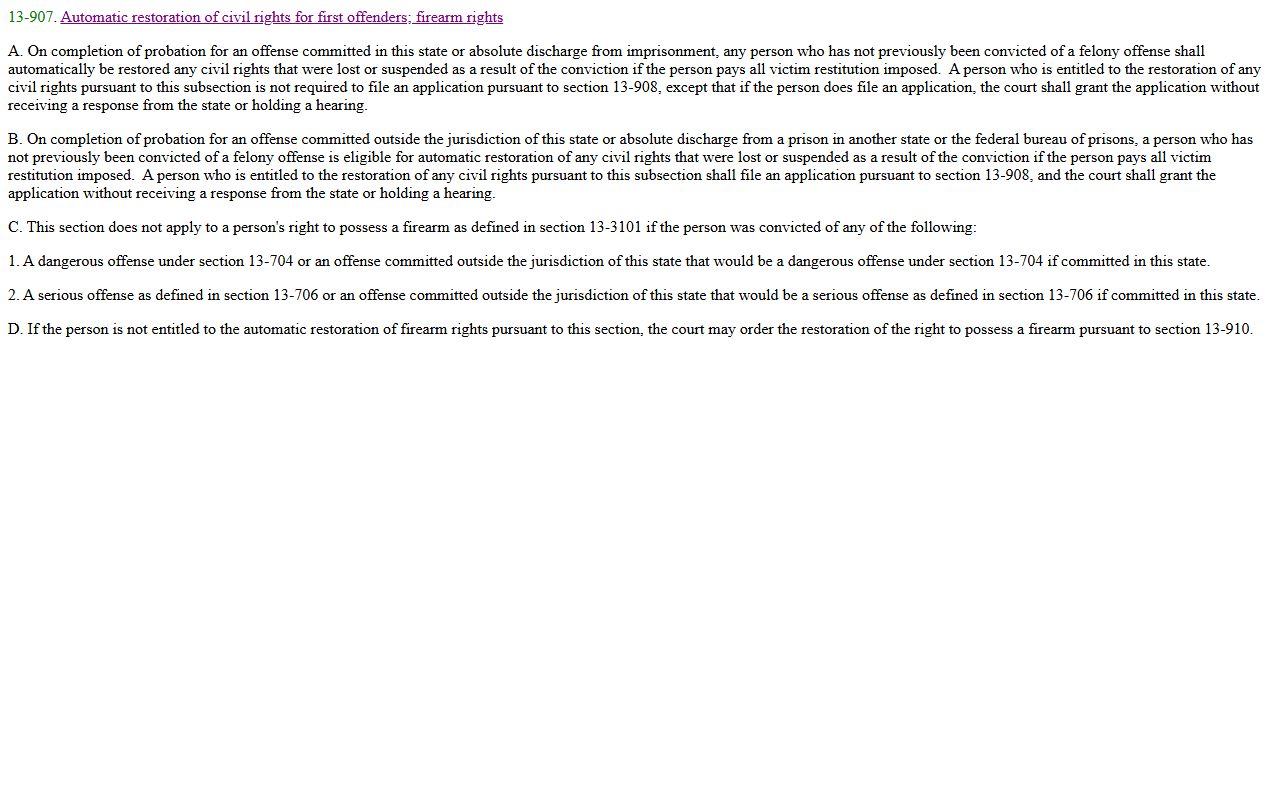
Rights restoration is a separate step from sealing or set aside. A person can have rights restored without sealing the record, and vice versa. For Pinal cases, the petition goes to Pinal Superior Court, the convicting court for the felony in question.
Statute Callout: Sealing under A.R.S. § 13-911 hides Pinal criminal records from public view, set aside under A.R.S. § 13-905 dismisses the judgment without erasing the record, and § 13-907 restores civil rights after a first felony.
Mugshots and Booking Photos
Pinal County booking photos come from the Adult Detention Center at 971 N Jason Lopez Circle in Florence. The official jail search has containers for inmate images, but a mugshot is not guaranteed to appear in a public profile. For confirmed booking photos and details, the safest route is a public records request to the Sheriff Records Unit. Photos in the news or on third-party sites are not the official record and may be out of date.
The jail listing is current custody only and updates every 60 minutes. A person who has been released, transferred to Arizona Department of Corrections, Rehabilitation and Reentry, federal custody, or another county will not show in the Pinal search. For booking confirmation, court dates, or bond amounts, the Adult Detention Center publishes a single information line at 520-509-7957.
How to Find a Pinal Criminal Case Step by Step
Most users want a single, ordered path. The steps below work for adult Superior Court felonies and most justice court misdemeanors, with a few branches at the end for sealed cases and statewide checks.
- Get the basic facts. Write down the full legal name, any aliases, the date of birth if known, and the rough date and city of the arrest.
- Check current custody. Run the Pinal Sheriff inmate search at the official Sheriff site to see if the person is in the Adult Detention Center right now.
- Search Arizona Public Access. Pick Pinal Superior Court or the relevant justice or municipal court, then run the name through the case lookup.
- Open the case. Note the case number, charges, hearings, and the disposition line. Disposition is what tells you whether the case ended in conviction, dismissal, or something else.
- Buy documents through eAccess. If you need pleadings, motions, or orders, Arizona eAccess sells document images for many Superior Court files within the covered date range.
- Request from the Clerk. For sealed parts, certified copies, or items not online, file a records request with the Clerk of Superior Court or visit the Clerk in Florence.
- Run a statewide DPS check if needed. Use the Applicant Fingerprint Card and the DPS Public Services Unit to get the official state criminal history.
- Cross-check with the County Attorney. If the case is open, the Pinal County Attorney's office is the source for charging decisions and victim contact.
Statewide Arizona Criminal Records Search
Arizona keeps a central criminal history at the Department of Public Safety. DPS is the official source for a statewide rap sheet that pulls in arrests and dispositions reported from every county, including Pinal. The public service is limited. A person can review their own record, employers and licensing agencies can run fingerprint checks with consent, and law enforcement can pull records under their normal authority.
DPS also runs the Arizona internet sex offender website under A.R.S. § 13-3827, publishes the Level 2 and Level 3 registrants, and warns that the information must not be used to threaten, intimidate, or harass. For a Pinal user the rule is simple. Use DPS for statewide criminal history. Use Pinal Public Access and the Clerk for the actual Pinal case files. Use the Sheriff for current jail custody.
Background Check Considerations
A Pinal name search on Arizona Public Access is fast, free, and useful, but it is not a Fair Credit Reporting Act background check. Employers, landlords, lenders, and licensing boards that act on records must use FCRA-compliant consumer reporting agencies or a fingerprint-based DPS check. A casual lookup can show patterns and case numbers, but it should not be used to make an FCRA-regulated decision.
Important: This site is not a consumer reporting agency under the Fair Credit Reporting Act and the records found here cannot be used for employment, credit, tenant, or insurance decisions.
Restricted Criminal Records in Pinal County
Not every Pinal criminal record is open. Arizona Public Access excludes victim and witness data, sealed cases, juvenile delinquency and incorrigible information, cases involving Orders of Protection, mental health records, and probate filings. The Pinal Clerk record-request page also closes mental health, dependency, severance, and adoption records to public review or reproduction.
Juvenile records run under their own rules. A.R.S. § 8-208 leaves some delinquency information open, but adoption, severance, and dependency are not. A.R.S. § 8-207 also makes clear that juvenile adjudications are not criminal convictions and do not carry the usual civil disabilities. Search warrants and sealed indictments may sit out of public view until an arrest or unsealing event, and the safest move is to contact the issuing court before trying to confirm a warrant by phone.
Note: Pinal Public Access excludes sealed cases, victim and witness data, and most juvenile delinquency or incorrigible records by design, so a clean search result does not always mean a clean record.